How to Build Tier Lists People Actually Want to Debate
Published Updated
Learn how to design Tier Lists that spark discussion, stay consistent, and make better use of Tier Versus tools for fandom rankings.
Most Tier Lists are easy to scroll past.
They rank characters, but they don’t invite conversation. They show preference, but not reasoning. And after a few seconds, readers move on because there’s nothing to react to.
A strong Tier List works differently. It creates a clear perspective, encourages comparison, and gives people a reason to respond. When built thoughtfully inside Tier Versus, it can become the starting point for community interaction, videos, blog posts, or recurring ranking challenges.
This guide explains how to design Tier Lists that people actually care about discussing.
Start with a comparison goal
Before selecting characters, decide what your Tier List is trying to compare.
A list becomes more interesting when readers instantly understand the purpose behind it. Instead of ranking everything at once, choose a direction like:
- most influential characters in a series
- smartest strategists in an anime arc
- best supporting characters in a franchise
- most intimidating villains
- protagonists with the strongest leadership traits
A comparison goal turns a Tier List into an argument instead of a preference sheet.
Agree on an episode cutoff for anime rankings
Before comparing an anime cast, agree on which season or episode the list covers. A character can look very different to someone halfway through a story and someone who has finished it. State whether manga events count, and keep later reveals out of the explanations when your audience has not reached them.
If you need to find a series before joining the discussion, Watchanimee provides episode guides and links to licensed services to help you watch anime online. Check the service’s regional catalog and the season available before subscribing.
Limit the number of characters intentionally
Large Tier Lists can look impressive, but smaller ones usually create better engagement.
When readers recognize every character in the list, they participate more easily. Tier Versus works especially well when comparisons feel manageable instead of overwhelming.
Try selections such as:
- main cast only
- members of a team or organization
- characters from one season
- rivals within a story
- characters with similar abilities
Focused selections produce stronger reactions than oversized rankings.
Give each tier a role
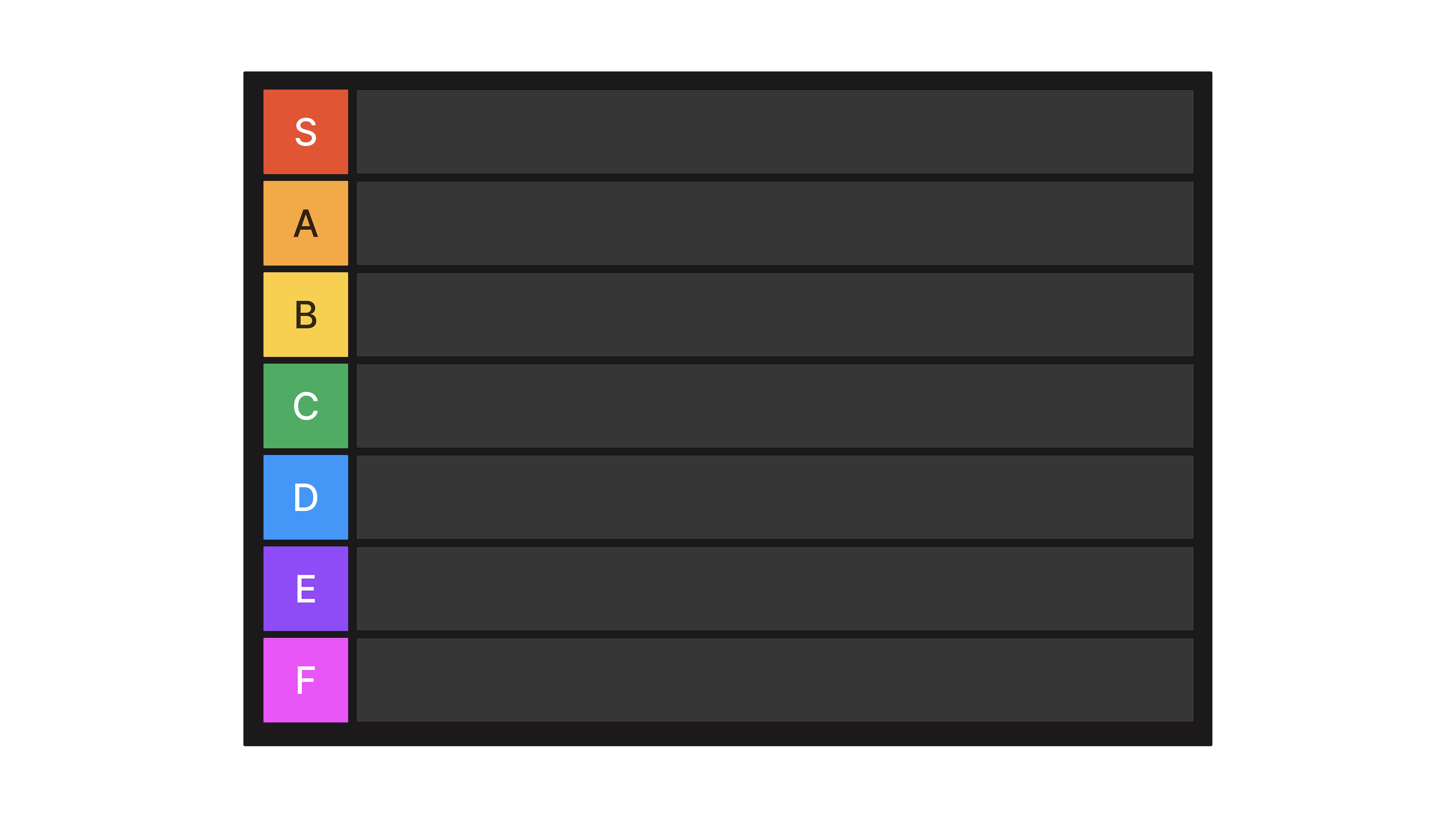
Letters like S, A, B, C, and D are familiar, but they become meaningful only when readers understand how they are used.
Instead of treating tiers as decoration, define their purpose clearly:
- S Tier represents characters that dominate your comparison category
- A Tier includes characters that nearly reach the top level
- B Tier covers reliable or balanced performers
- C Tier highlights inconsistent or situational characters
- D Tier identifies characters that struggle within this ranking theme
This structure helps readers follow your logic even when they disagree with the outcome.
Make the middle section interesting
Many creators spend most of their time deciding the top tier and the lowest tier. The middle often receives less attention, but that section usually generates the strongest discussion.
When characters sit close together in ability, popularity, or narrative importance, direct comparisons become valuable. Using Versus mode in Tier Versus helps resolve these close decisions step by step instead of relying on guesswork.
Pair comparisons often improve ranking quality more than moving a single character between S and A.
Remove characters that weaken the comparison
Including every available character can reduce clarity.
If someone doesn’t match your ranking theme, removing them strengthens the final result. The Settings tab allows you to shape a better comparison environment before starting the ranking process.
Examples include:
- removing comic relief characters from serious power rankings
- excluding alternate versions of the same character
- focusing only on characters active during one storyline
- keeping only characters with major narrative relevance
Cleaner character pools produce clearer conclusions.
Use community feedback as part of the ranking process
A Tier List becomes more valuable when readers participate.
Ranking mode allows visitors to vote using emotional and analytical categories like Love, Power, Cute, or Hate. These responses reveal how audiences interpret characters differently from the creator’s perspective.
This opens the door to content ideas such as:
- comparing creator rankings with audience rankings
- highlighting unexpected popularity results
- identifying controversial placements
- revisiting Tier Lists after community voting changes perception
Community input transforms a static ranking into an evolving conversation.
Build recurring ranking themes
One Tier List can lead to many related lists.
Instead of creating a single large ranking, consider building a sequence:
- best protagonists this season
- strongest villains in one franchise
- most improved characters across arcs
- most creative abilities in a genre
- most underrated supporting roles
Series-based rankings keep audiences returning because they expect the next comparison.
Use custom lists to avoid repetition
Many fandom rankings repeat the same character combinations across the internet. Custom Tier Lists created with the Maker tool allow you to explore less obvious comparisons.
Some effective examples include:
- mentor characters across different anime
- tactical leaders in strategy-focused stories
- tournament arc finalists from multiple series
- rival duos instead of individual characters
- characters introduced after a major plot shift
Unexpected selections often create stronger engagement than predictable ones.
Turn rankings into shareable content formats
A Tier List becomes more useful when it exists in multiple formats.
After finishing your ranking in Tier Versus, you can expand it into:
discussion posts
Explain why certain placements changed compared to previous lists.
comparison threads
Ask readers how they would reorder specific tiers.
short-form videos
Highlight three surprising placements and explain them quickly.
collaborative rankings
Invite others to publish their own versions in the Shared section and compare results.
These extensions make one Tier List generate multiple pieces of content.
Decide what type of disagreement you want
Some Tier Lists aim to reflect consensus. Others aim to challenge it.
Both approaches work well if the intention is clear from the beginning.
Consensus-style rankings usually:
- feel easier to follow
- attract broader participation
- reflect familiar expectations
Challenge-style rankings usually:
- generate stronger debate
- encourage replies and counter-lists
- increase engagement through contrast
Choosing one direction helps shape how readers respond to your list.
Keep the ranking readable
Clarity matters more than complexity.
Readers should understand:
- what the list compares
- why characters were selected
- what each tier represents
- where disagreements are expected
When these elements are visible, even a subjective Tier List feels structured and worth discussing.
Conclusion
Tier Lists become more engaging when they focus on a clear comparison goal, use a curated character selection, and invite audience participation through the tools available in Tier Versus.
Instead of ranking everything at once, build lists that explore specific ideas. When your ranking reflects intention rather than impulse, readers don’t just scroll past it — they respond to it.